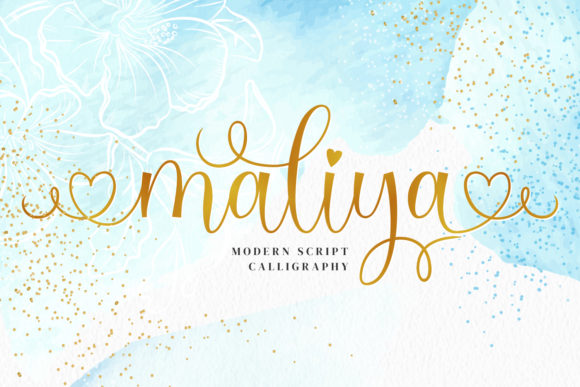
Maliya: The Handwritten Typeface for Authentic Brand Identity
The cursor blinked on the blank canvas, a familiar moment of hesitation that every graphic designer knows well. I was working with a client who owned a small, artisanal skincare line called "Botanical & Co." She wanted something that felt intimate, like a handwritten note from a friend, but she needed it to hold up as a professional brand identity. We had tried several standard cursive fonts, but they all felt too rigid or overly decorative. Then, I stumbled upon Maliya. It wasn't just another script font; it was an elegant and flowing handwritten font that immediately shifted the entire mood of the project.
Opening the file in my design software, the first thing I noticed was the character. Maliya features beautiful swashes that will add a romantic touch to your designs without overwhelming the viewer. As I typed out the client's name, the letters seemed to dance across the screen. It has an authentic feel that is rare to find in digital typefaces, which often suffer from looking too perfect or machine-generated. This was exactly what we needed to create gorgeous wedding-style elegance for a modern skincare brand.
From Mockup to Main Character
I started by placing the font on a simple logo draft. Usually, when using a script font, there is a fear that it might look illegible or cluttered. However, Maliya strikes a delicate balance between artistic flair and readability. The strokes are fluid yet distinct enough that the wordmark remained clear even at smaller sizes. I tested it on a business card mockup, and the way the ink seemed to flow off the page gave the stationery a tactile quality that clients love.
In branding, visual hierarchy is everything. Maliya works best as a display font or a headline font where you want to make a statement. For Botanical & Co., we used it exclusively for the primary logo and key headlines. It acts as the emotional anchor of the brand. When paired with a clean sans serif font for body text, the contrast creates a sophisticated look. The script provides the warmth and personality, while the supporting typography ensures that product descriptions and contact information remain easy to read. This combination prevents the design from feeling chaotic or difficult to navigate.
Testing Versatility Across Media
A font is only as good as its application. I took Maliya beyond the logo and tested it across various design assets to see how it held up in the real world. On social media graphics, specifically Instagram posts promoting new products, the font added a personal touch that stopped the scroll. The romantic vibe resonated perfectly with the target audience, making the brand feel approachable and trustworthy.
I also experimented with packaging design. Placing the font on a product label sticker, the beautiful swashes caught the light beautifully, adding a premium feel to the bottle. Whether it was for a shop sign, a flyer, or a website header, Maliya adapted seamlessly. Its flowing nature makes it ideal for editorial design as well, where it can serve as a drop cap or a pull quote to break up dense text. In web design, using it for the homepage hero section created an immediate connection with visitors, setting the tone before they even read a single paragraph of copy.
Understanding the Personality of Maliya
When selecting a commercial font for a client, understanding the personality is crucial. Maliya is not a casual scribble; it is refined and deliberate. It feels like a letter written with a high-quality fountain pen. This authenticity is why it stands out in the Script Amp category of Fonts. It brings a sense of history and craftsmanship to any project, which is why it is so effective for businesses selling handmade goods, organic foods, or luxury services.
However, it is important to use it correctly. Because of its expressive nature, Maliya is not suitable for long blocks of text. Trying to force it into a paragraph would result in a design that is hard to read and visually exhausting. Instead, think of it as an accent font or a supporting typeface for short-form text. Use it for titles, logos, quotes, and captions. This restraint allows the font to shine without becoming a distraction.
Pairing Strategies for Professional Results
One of the most common questions designers face is how to pair a script font. With Maliya, the options are versatile. Pairing it with a modern serif font can enhance its classic appeal, creating a timeless look that feels both traditional and contemporary. Alternatively, a geometric sans serif font offers a crisp contrast that highlights the organic curves of the script. The key is to avoid pairing it with another script font, as this can quickly lead to a messy and unprofessional appearance.
For the skincare brand, we chose a minimalist sans serif to complement the elegance of Maliya. The result was a cohesive brand identity that felt balanced. The script provided the soul of the brand, while the sans serif provided the structure. This dynamic relationship between different typefaces is essential for building a recognizable and memorable brand system.
Practical Tips for Your Next Project
If you are considering using Maliya for your own creative work, start by testing it thoroughly before committing to a full brand system. Create a few variations: try it in a large size for a poster, a medium size for a logo, and a small size for a tagline. Pay attention to how the ligatures and alternates interact with each other. Many high-quality fonts include special characters that change the flow of the text, adding unique touches to specific letter combinations.
Check the included styles and multilingual support if your project targets a global audience. While Maliya is primarily designed for English, understanding its character set helps you determine its scope. Also, review the file formats to ensure compatibility with your workflow. Whether you are designing merchandise, digital templates, or printed marketing materials, having the right files is essential for a smooth production process.
Remember that licensing matters. Ensure you have the correct commercial font license for your intended use, especially if you are creating assets for a client or selling products. A proper license protects both you and your client and supports the designers who create these beautiful tools.
In the end, Maliya proved to be more than just a typeface; it was the catalyst for a successful rebrand. It helped us communicate the values of the client in a way that words alone could not. By falling in love with its authentic feel, we were able to create a visual identity that felt genuine and enduring. For any designer looking to add a touch of romance and elegance to their work, Maliya is a fantastic addition to the toolkit. It transforms ordinary layouts into extraordinary stories, proving that the right font can make all the difference in the world of design.